
Searching Cases by Name
For Lafayette County Circuit Court information, Search ARCourts is the official public participant search. Type the name the way the court record likely spells it. Unsure of spelling? Start with fewer fields. One wrong middle name can bury a valid result. Entities go in the Organization or Case Description field, never the personal last-name box.
- Identify Circuit Court or District Court from the notice, filing type, or citation before opening the portal.
- Enter the participant’s last name and first name. Add a middle name only when it helps separate matches.
- For a business or public body, use Organization or Case Description instead of forcing the name into person fields.
- Apply Lafayette County, court, case type, status, or date filters that the live interface offers.
- Open a possible match and verify court, case number, filing date, type, judge, and status before reading events.
The search form's fields are listed on the official page itself.
| Field Label | Type | Required | Notes |
|---|---|---|---|
| First Name | Text | No or unspecified | Participant search |
| Middle Name | Text | No or unspecified | Remove it when a narrow query fails |
| Last Name | Text | No or unspecified | Primary participant field |
| Organization or Case Description | Text | No or unspecified | Use for an entity or descriptive case search |
| Case Number | Text | No or unspecified | Use the complete assigned number when known |
| Court or County | Filter | No or unspecified | Narrow to Lafayette and the correct court |
| Case type, status, or date | Advanced filters | No or unspecified | Options can be populated by the live portal |
Lafayette County Case Search Filters
Matching a name is where most Lafayette County case search attempts go wrong. A familiar party list can still point to the wrong file. Check the court and county before trusting any hit. A District Court entry never turns into a Circuit Court docket just because the parties look right. And a Miller County case is a Miller County case. It sits in the same Eighth South Judicial Circuit as Lafayette County.
The Arkansas Judiciary online services directory lists public case search, electronic filing, eTraffic, and jury services. Each one is a separate tool.
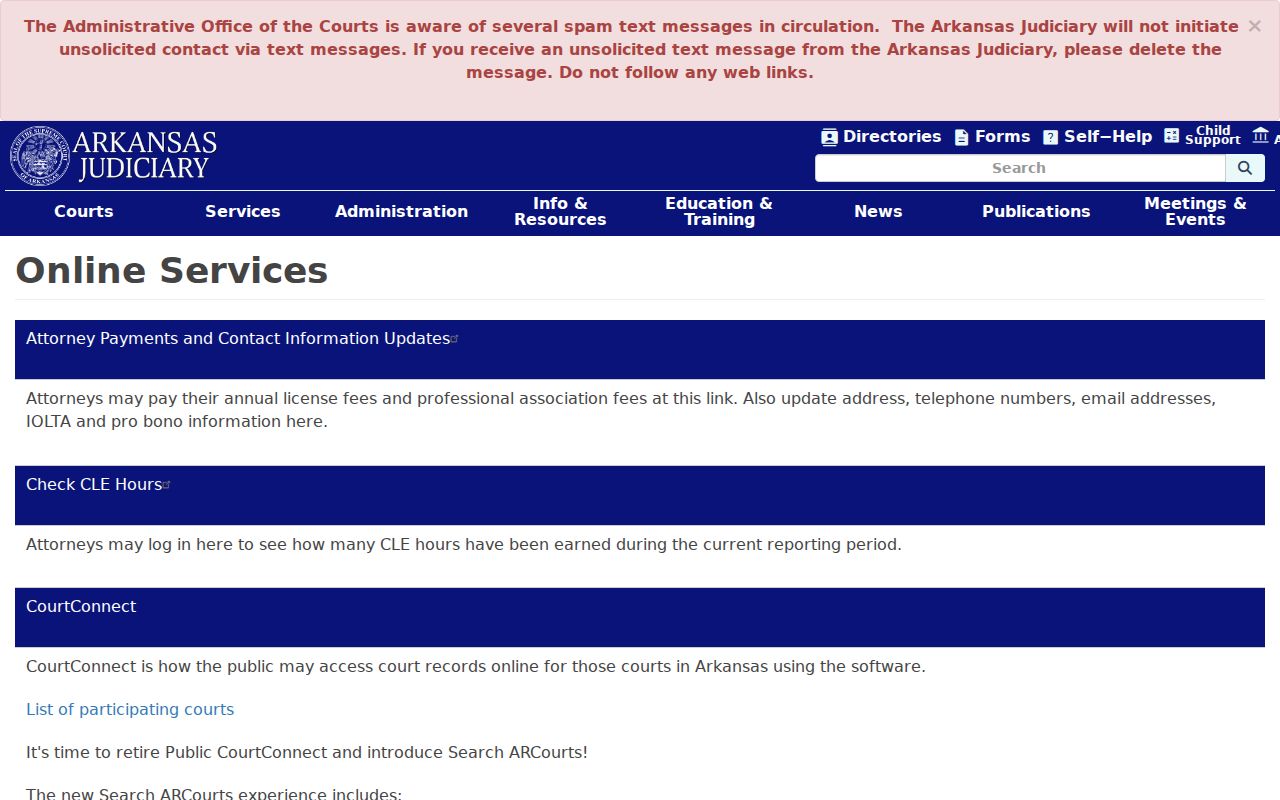
That separation matters in practice. Search ARCourts is the tool for finding Lafayette County court records. A payment screen or a filing account is not a broader case database, so do not lean on one to do the other's job.
Searching by Case Number
A complete case number is the strongest key for a Lafayette County docket search. It skips past common-name collisions and hands the clerk an exact locator. Type the complete court-assigned number just as it reads on the notice, order, citation, or file mark. Keep every leading zero. Keep the hyphens too. There is no single stable Lafayette display pattern, so resist the urge to guess at a sample format.
If an exact copy returns nothing, copy the punctuation and spacing that the live Search ARCourts field shows. Then double-check the court level. Federal numbers live in PACER, not Search ARCourts. District Court records may also carry less online depth than Circuit Court records. Rather than swapping digits until some unrelated case surfaces, call the right clerk.
When you call, give the clerk the number, the court, and the case type. Add the title or date of what you need. That detail helps just as much when you want a copy of one order instead of the whole case file.
Lafayette County Organization Case Search
Search for businesses, agencies, and other entities through the Organization or Case Description field. Lead with the core name. Heavy punctuation or a long legal suffix can bury an otherwise valid Lafayette County result.
One organization name can surface in several public cases. The same court-level checks you would run for a person search still apply here. When a match comes back, confirm the court. Also confirm the county, case number, filing date, and the entity's role as a participant.
Lafayette County Case Search Trouble
A docket search that returns nothing can mean several things. The name may be misspelled. You may also be looking in the wrong court. Older matters sit in paper files, and some records are sealed or restricted. A district court can also lack full statewide detail. The empty screen is never official proof that no Lafayette County case exists. Trim an optional middle name first. Check the organization field too, and make sure Lafayette County is the selected county.
- Use the case number from a notice or order if one is available.
- Check District Court for a ticket, misdemeanor, ordinance, small-claims, or limited civil matter.
- Call the Lafayette County Circuit Clerk at 870-921-4878 for a Circuit Court file or older record.
- Ask the filing court whether electronic coverage, a transfer, or a legal restriction explains the gap.
Portal access problems and technical glitches go to the AOC help desk. Questions about a specific Lafayette County case belong with the filing clerk instead. Avoid sending confidential case data through a general technical-support form unless the official instructions say to do so.
What a Case Search Returns
Search ARCourts can pull back a fair amount. You may see parties, the judge, filings, criminal charges and dispositions, upcoming events, judgments, and links to some public documents. How much Lafayette County detail you see depends on the court and the record. Keep one distinction in mind. The docket is a structured index of what happened in a case. A linked image is just one available copy of a filed item.
| Case Number | The court-assigned identifier and best key for a follow-up search or clerk request. |
|---|---|
| Court and County | The source court that owns the record; verify Lafayette County and Circuit or District Court. |
| Style or Parties | The case caption and public participant roles, subject to access rules. |
| Case Type and Filed Date | The category of matter and the date the case entered the court system. |
| Judge or Division | The assigned judicial officer or administrative division shown in the record. |
| Status and Disposition | The recorded state or outcome, which must be read with the latest orders and charge-level results. |
| Filings and Future Events | Chronological entries and scheduled proceedings, with links to some documents when offered. |
A filing entry only proves the clerk recorded an item. It does not mean the judge granted the request inside it. Read the docket for a later order. Future events on a Lafayette County docket work the same way. A listed hearing can be rescheduled or canceled. Use the Lafayette County court calendar process to confirm a date before you go.
Lafayette County Case Search or eFlex
Search ARCourts and eFlex do two different jobs. One is for the public, the other for filers. Search ARCourts lets anyone view Lafayette County docket and case information with no advertised basic login fee. eFlex works differently. It is an account-based tool for submitting filings through the AOC's court technology. A sign-in only matters if you plan to file. Reading the free public results calls for no eFlex account at all.
| Point | Search ARCourts | Arkansas eFlex |
|---|---|---|
| Main task | Find public cases and docket events | Prepare and submit electronic filings |
| Typical access | Basic public search without advertised login | Registration, account, and filing workflow |
| Documents | Links to some public images | Documents submitted by authorized filers |
The official eFlex resources page presents the filing system’s sign-on and support materials.
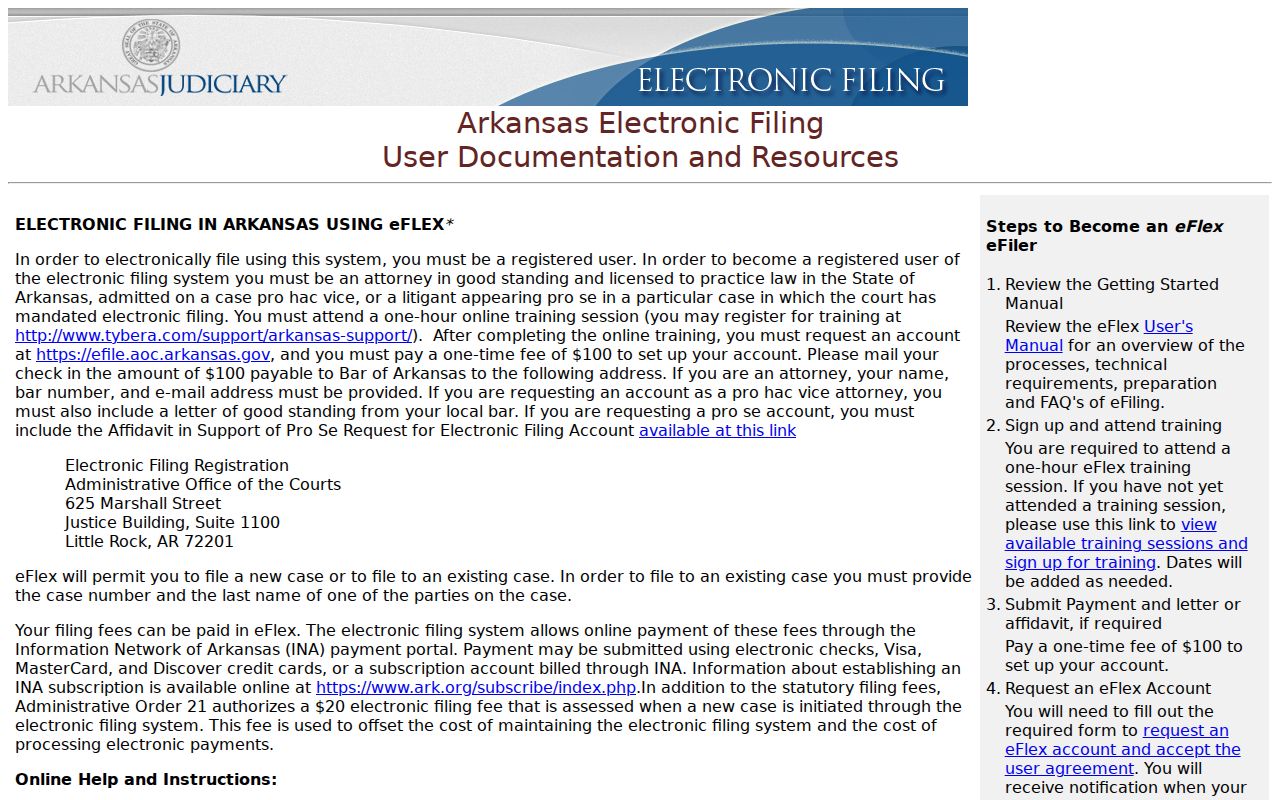
Because eFlex centers on filing, a public Lafayette County court docket search and an electronic submission account are simply not the same thing.
Lafayette County Case Search Registration
Registration belongs to the filing side, not to a public Lafayette County case lookup. If you just want to find a court docket, stay in Search ARCourts. Authorized filers take a separate path. They follow the AOC's current instructions for account approval and the technical steps that come with it. The AOC eFlex registration instructions cover account setup, training, and how filings get submitted.
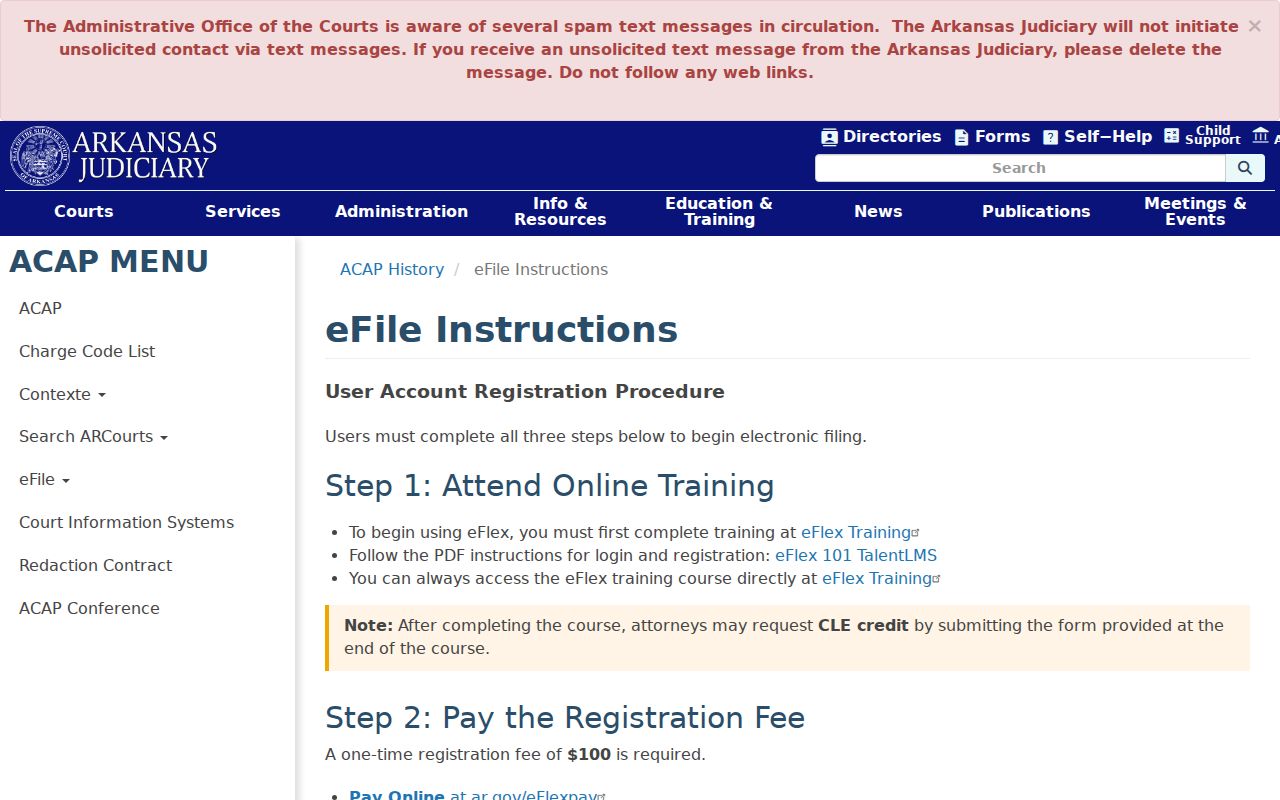
Those registration steps govern filing only, and they add no public Lafayette County fields to Search ARCourts.
Lafayette County Case Search Filing Terms
Electronic filing terms apply only to the account-based service. Lawyers and filers use it to send papers into participating courts. They sit apart from eFlex terms of use conditions. They also do not replace Administrative Order 19, which sets the real framework for public access. And nothing in them unlocks a sealed or hidden Lafayette County document through a case search.
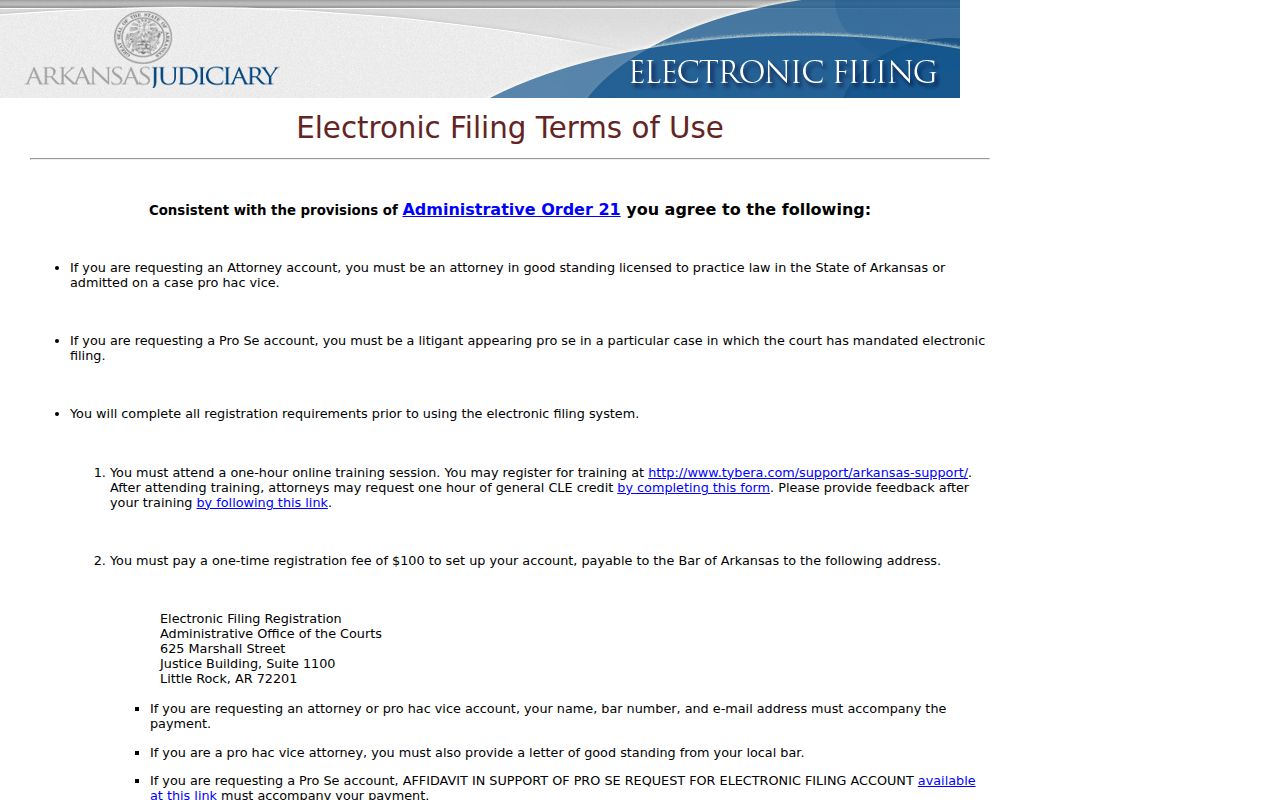
A controlled filing service carries its own rules, so read them as terms for that tool alone. They place no limits on the separate public case-search route.
Statewide vs County Case Search
No separate official county portal serves Lafayette County dockets. So the real comparison is Search ARCourts versus the file held by the clerk. Search ARCourts works as the statewide discovery layer. The Lafayette County Circuit Clerk, or the responsible District Court clerk, keeps the original local record and answers case-specific questions about a court docket.
| Search ARCourts | Lafayette Clerk Channel |
|---|---|
| Searches public information from courts using Contexte | Works from the original file held by the responsible court |
| Best for names, case numbers, events, and visible links | Best for old files, absent images, certification, and current case questions |
| Remote detail varies by court and access rule | Access still follows law, court order, and custodian procedure |
At the Circuit Clerk counter, ask for what you actually need: a docket printout, a named filed instrument, a judgment, an order, or a certified copy. Call ahead about retrieval, payment, mailing, fax, and any public terminal. Lafayette County posts no separate fee sheet, so confirm costs before you go.
Lafayette County Older Case Search
Lafayette Circuit Court moved onto the Contexte case-management system in 2011. That date is not a hard cutoff for searching. Some older cases were back-entered. Paper or microfilm files may carry only thin electronic entries. A pre-2011 file, or a docket with no linked images, calls for a request to the clerk. Do not conclude the case vanished.
The AOC court-technology build initiative page describes a newer beta application covering district criminal and traffic work, with search, scheduling, outcomes, and payments.
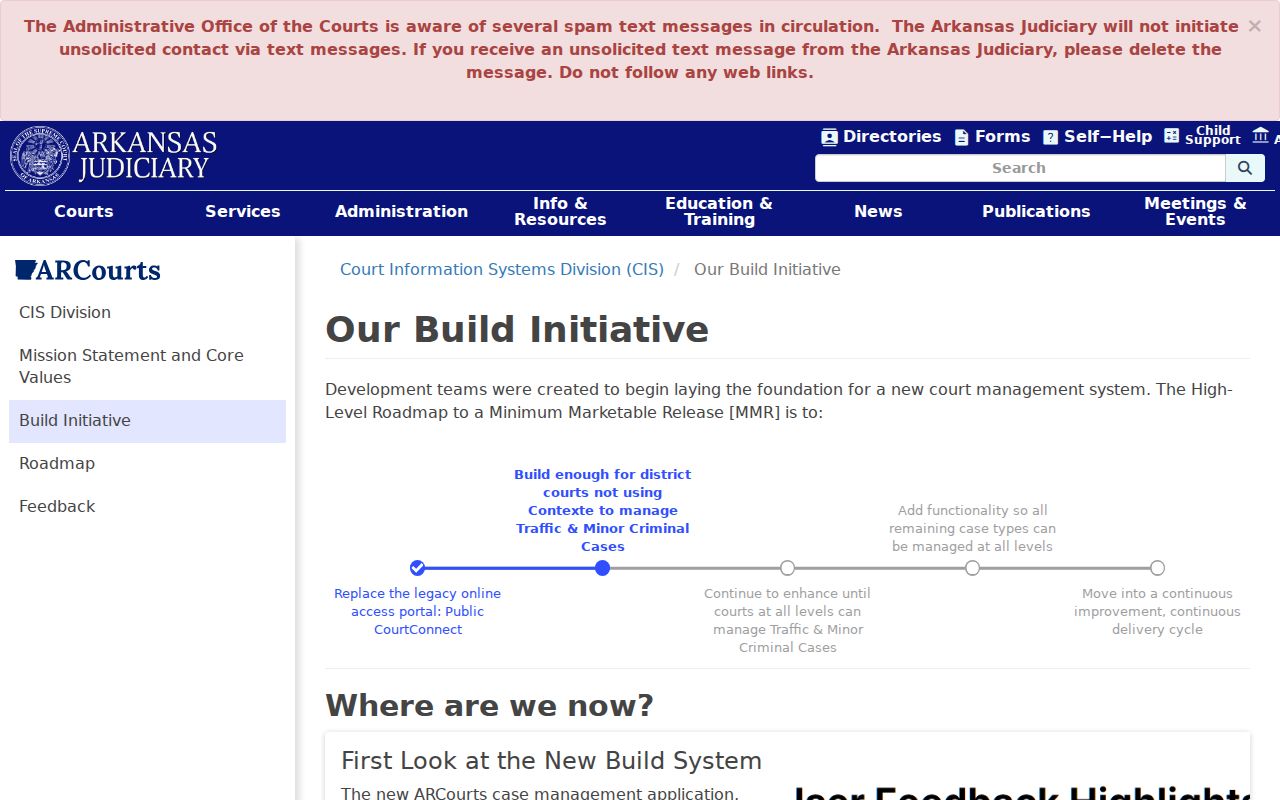
The 2026 beta work shows statewide modernization still under way. It does not prove every Lafayette County District Court function now runs on that system. If a local case is missing there, keep working through the named clerk.
Lafayette County Case Search Help
Know which office to call before you pick up the phone. Technical trouble with Search ARCourts belongs to AOC support, not the courthouse. Questions about a Lafayette County Circuit Court file go to the Circuit Clerk. That office covers docket entries, copies, and certification for Circuit Court cases. A District Court clerk answers questions about the limited-jurisdiction cases filed in that department. A District docket question never goes to Circuit staff.
For portal problems, AOC technical support answers at 501-410-1900 option 1 or 866-823-5778. The Lafayette County Circuit Clerk can be reached at 870-921-4878. Have your case number ready. Add the court, the case type, and the filing or event date involved. That small bit of prep keeps a broken portal apart from a docket question. Only the filing court can answer that one.
Access and Restricted Cases
Arkansas Supreme Court Administrative Order 19 sets the rules for public access to court records, and it leaves out anything made confidential by law, rule, or court order. Social Security numbers and other protected identifiers are not public search fields. Juvenile records, sealed criminal material, adoption records, and parts of domestic-relations files can also be restricted.
Remote access can be narrower than what the clerk's office itself provides. Redaction may hide a field or document image while leaving a public case shell. Sealing can limit an entry or the whole case more broadly. Paying a fee, showing an ID card, or holding a portal account does not create a right to restricted material.
Missing does not mean nonexistent. Ask the responsible Lafayette County clerk whether age, indexing, transfer, court level, or a lawful access restriction explains the result.
If access is denied, ask which rule, statute, or order controls and what review method exists. A docket search should respect that boundary, not try to reconstruct suppressed facts.